Synthetic shoppers do their homework. Real people don't.
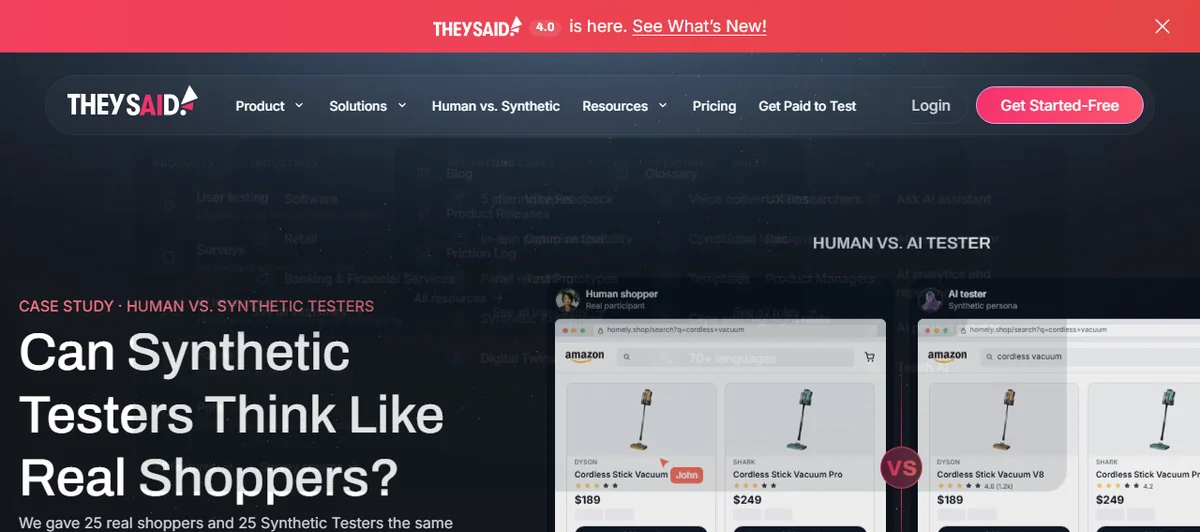
TheySaid, a user-testing startup, published a useful study this month. It recorded 25 real shoppers choosing between a Dyson and a Shark vacuum on Amazon, built one AI shopper from each person’s session, and ran the same task again.
The AI shoppers picked the same brand as their human in 21 of 25 pairs. They reproduced half of the humans’ main findings outright, and 70 percent counting partial matches.
The bigger gap was behavior. The synthetic shoppers did their homework. The humans didn’t. The AI compared twice as many products, read every review and took twice as long. People stopped at good enough, went with habit, and worried about the money.
Two caveats. Each AI shopper was scored against the person it was built from, which tests copying more than prediction. And the vendor graded its own product.
Why does a vacuum study matter to me? My company, Merakoi, runs research with real patients for pharma teams, and those same teams are now being offered synthetic patients. Patients don’t drop out of trials because they misread the protocol, they drop out because they are tired, so I expect a synthetic patient to make every study look easier than it is.